
Introduction
A private-label incense project is successful when a product concept becomes a specification that a factory can repeat. That means agreeing on more than scent and artwork. The buyer and supplier need the same understanding of format, material direction, pack count, packaging protection, inspection points and delivery requirements.
For retail brands, concept stores and wellness businesses, private label can be a practical route to a differentiated collection without building a production line. The first decision is not “Which fragrance should we launch?” It is “What product experience are we trying to sell, and how will we control it from sample through shipment?” This guide explains the OEM process in buyer language and gives you a more useful briefing structure for a private-label incense manufacturer.
What is private-label incense?
Private-label incense is incense supplied under the buyer’s brand rather than the factory’s own retail brand. The level of customisation can range from a finished stock product with a branded label to a fully specified range with selected fragrance direction, product components, printed packaging and an agreed quality plan.
The practical distinction matters. A light-customisation project can often use existing product structures and standard cartons. A fully custom project may need product development, artwork approval, component sourcing, packaging prototyping and a longer production plan. Neither route is inherently better. The right route depends on your target retail price, launch date, quantity and need for differentiation.
Start with the buyer brief, not a product photo
A photograph is useful for visual direction, but it is not a production specification. Factories need a short written brief that turns the idea into measurable decisions. A clear RFQ reduces back-and-forth, lets a supplier quote comparable options and makes sample approval more meaningful.
Information to include in an incense RFQ
- Target market and sales channel. Tell the supplier whether the range is for independent retail, an ecommerce launch, a hotel programme, a subscription box or corporate gifting. This influences pack size, price architecture and shipping preparation.
- Product format. State whether you are considering sticks, cones, backflow cones, a holder-and-incense set or another combination. Include the intended number of pieces per retail unit.
- Material and scent direction. Describe the desired character without making unsupported ingredient claims. For example: warm wood, resinous, botanical, low-visual-smoke or a lighter daily-burn profile.
- Retail positioning. Share your intended retail price or target ex-works/FOB cost range. A supplier can then avoid suggesting a rigid gift box for a product that needs a simple paper carton.
- Packaging requirements. Include product dimensions if known, logo files, print colours, barcode location, warning area, insert needs and any recycled-content or material claim that must be supported.
- Quantity and delivery window. Give an estimated first order quantity by SKU and the destination port or country. An MOQ is meaningful only when linked to the product, print method, components and required finish.
At DaoHalo’s 8,000m² Shenzhen facility, this kind of brief gives the team a practical starting point for component selection, set assembly and export packing discussion. It also prevents a common sourcing mistake: approving a beautiful sample without confirming that its packaging, repeatability and carton plan fit the intended order.
Choose the right level of customisation
Stock product with branded label or insert
This is often the most efficient option for a smaller launch or market test. The product and its primary pack are established; branding is applied through a label, sleeve, card or insert. It reduces development variables and can make sampling quicker. The trade-off is less control over format and shelf appearance.
Existing product with custom printed retail packaging
This route keeps a proven product structure while giving the buyer stronger visual ownership. It works well when a brand has firm artwork and wants a consistent shelf presence. The supplier should still confirm the dieline, finished dimensions, board or carton specification, print proof, barcode placement and master-carton quantity before bulk production.
Developed range with bespoke components or set building
This option is appropriate when the buyer needs a specific product combination, a new holder, a tailored gift box or a scent direction that differs from available choices. It may involve more sample rounds and higher development risk, so decision-makers should set a sample milestone and change-control process early. Do not treat a sample as approved until product, packaging and relevant labels have been reviewed together.
How MOQ really works in an OEM incense order
MOQ is not a universal number for incense. It changes with the number of SKUs, fragrance variants, packaging format, printing method, accessory components and whether a supplier is using existing or new tooling. Buyers should ask what creates the MOQ rather than comparing only the final figure.
For example, a project using an existing incense format and a simple label may have a different minimum from the same product packed in a custom rigid box with an insert and foil decoration. Multiple small fragrance variants can also make a single total order less efficient because each variant needs its own packing and quality control attention.
Ask a supplier to separate the quotation into product, primary pack, printed packaging, assembly, carton packing and any one-time development or tooling items. This does not guarantee a lower price, but it makes the quote easier to evaluate and makes later changes less disruptive.
Use samples to test the complete customer experience
The sample stage should answer the questions a buyer cannot resolve through photos or a cost sheet. Product application matters: does the incense fit the selected holder, is the pack easy to open, does the product look protected after handling, and does the retail unit communicate safe-use information where needed?
When reviewing samples, document rather than rely on memory. A concise sample-approval sheet can include:
- Product name, version and pack count
- Visual reference photos for accepted finish and placement
- Approved artwork PDF and dieline revision
- Dimensions and component list
- Packaging closure, insert and carton configuration
- Any destination-market warnings or language requirements to be confirmed by the buyer
- A dated approval or change list
This record becomes useful during factory testing and shipment inspection. It gives the team a baseline for checking whether the bulk order matches the approved sample, rather than judging each carton by personal preference on the day.
What to include in a practical quality plan
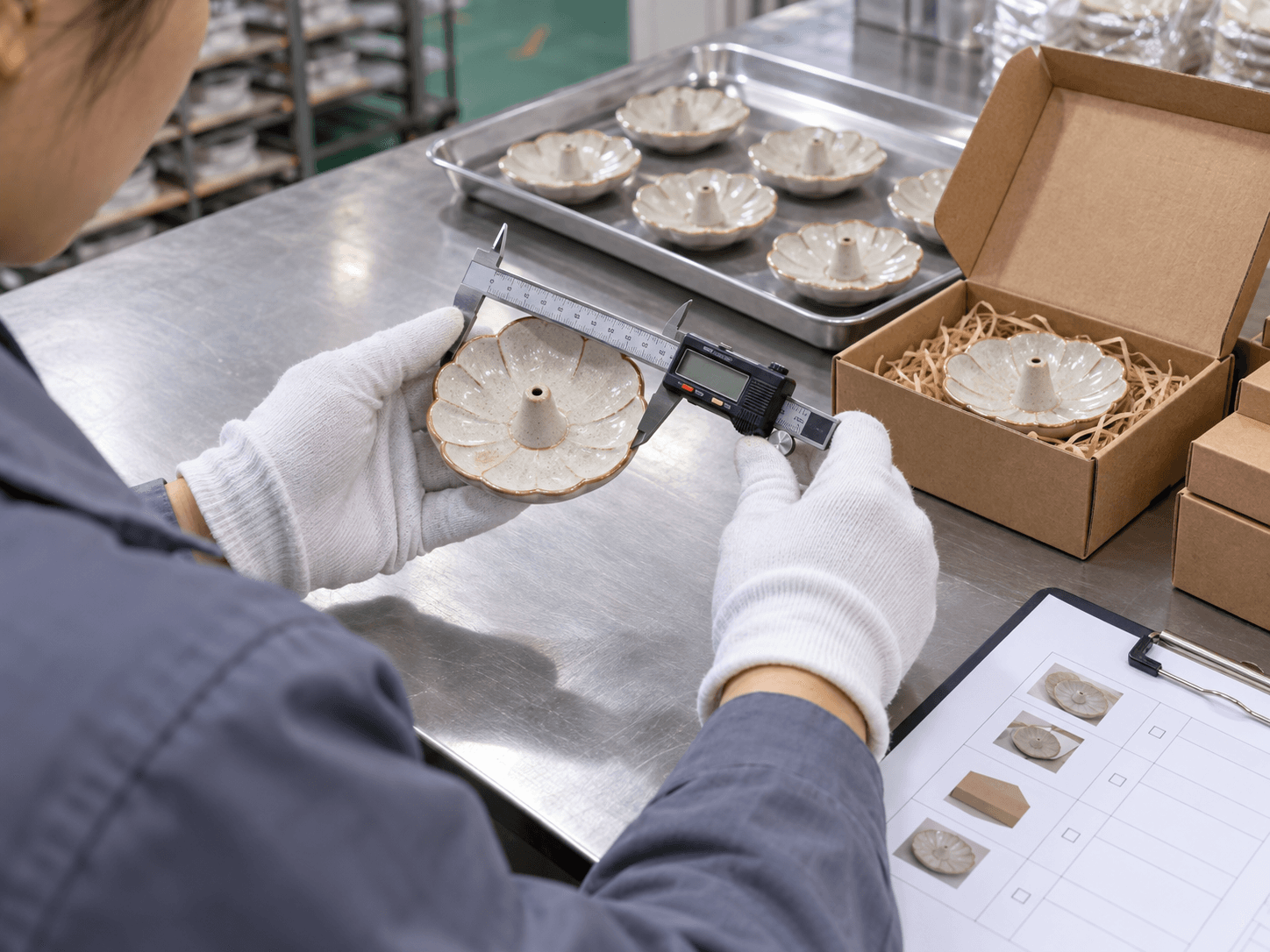
Quality control should be visible in the product plan, not added after the production date is fixed. For incense and set products, useful control points usually include component count, visible finish, breakage, product-to-holder fit, artwork version, label legibility, carton marking and packing quantity.
An in-process check can identify assembly errors before all units are packed. A pre-shipment or final inspection can review finished goods, inner packs and export cartons against the agreed specification. The sampling approach, acceptance level and any third-party inspection arrangement should be agreed in the purchase order or inspection plan; they should not be assumed from a previous order.
For products sold to EU consumers, buyers should also review applicable safety and traceability obligations with their responsible person or compliance adviser. The EU’s General Product Safety Regulation requires online offers targeted at EU consumers to show specified manufacturer/responsible-person, product-identification and warning information, where applicable. See the official EUR-Lex text of Regulation (EU) 2023/988. This is general information, not legal advice.
Plan packaging for the route, not only the shelf
Incense is lightweight, but it can be sensitive to crushing, bending, loose components and moisture exposure. Packaging should protect the actual product configuration during normal handling and shipment, not only look finished in a studio sample.
During installation preparation for a gift set or display unit, check how the retail pack nests into the inner box, how much movement remains around breakable components and how cartons will be sealed and marked. A supplier can prepare a packing sample or carton layout for review before full production. This is especially helpful for ceramic holders, brass objects, mixed gift sets and orders that will be shipped through several handling points.
A buyer-friendly OEM workflow
- Brief and feasibility review: Confirm product format, target market, quantity, packaging direction and delivery needs.
- Quotation and scope alignment: Separate recurring components from one-time development items and identify open decisions.
- Sample development: Review product, packaging and assembly together; record changes in writing.
- Artwork and specification approval: Lock the dieline, copy, barcode/warning space, component list and quality points.
- Production and in-process quality control: Check critical details while corrections are still practical.
- Shipment inspection and handoff: Verify the agreed finished-goods and carton points, then release documents and freight arrangements.
FAQ
What should I ask a private-label incense manufacturer before requesting samples?
Ask about available formats, the product and packaging assumptions behind the MOQ, sample lead time, artwork requirements, quality-control checkpoints, export packing and what information is needed for your destination market. Provide your quantity, target price and delivery window so the answer is specific to your project.
Can I use my own packaging design with an existing incense product?
Usually, yes, if the factory confirms that the design fits the approved product dimensions, protection requirements and print process. The buyer should approve the dieline and final artwork before production and keep a record of the approved revision.
How many sample rounds are normal?
There is no fixed number. A straightforward label change may need one product and artwork approval. A bespoke set or new packaging structure may need additional rounds because the product, insert and outer carton must work together. Define a change list after each review to keep the process controlled.
What is checked during a shipment inspection?
The exact checklist should be agreed in advance. It may include quantity, appearance, product fit, packaging condition, artwork version, labelling, carton marking and packing count. Inspection is most useful when it is measured against a signed sample and specification.
Conclusion
Private-label incense sourcing is less about finding the lowest initial quote and more about creating a controlled path from brief to repeat order. Buyers who define the product experience, approve a complete sample, document their requirements and plan factory testing before shipment are in a stronger position to protect both the launch and the next production run.
CTA: Discuss your private-label incense brief
Are you developing a branded incense range, holder set or retail gift concept? Send your requirements with your target market, product format, estimated quantity and delivery window. Our Shenzhen team can help you identify a practical product, packaging and export-preparation route.